This is a photo I took in my community of the beautiful, July full moon. Before being called by God to prophesy, Amos was a herdsmen & farmer. He became like the light of this full moon, shining God's warning & wisdom upon his neighbors who were caught up in corruption & spiritual darkness. There are numerous examples through out the old testament showing us what Acts 10:34 tells us: among the wayward & unrepentant, God doesn't show favoritism. His Holiness brings justice upon everyone. His 'chosen' people, Israel, are certainly no exception. Yet, He is patient & gives lots of chances for people to make changes by seeking & returning to Him. It is our choice to heed His messages (scripture) or to not. Whom of those who've read, can honestly deny His ROAR!? Therefore, thus I will do to you, O Israel; Because I shall do this to you, Prepare to meet your God, O Israel. Amos 4:12 God's instruction to His people is not convoluted. It seems to me as straightforward as looking both ways before crossing the street ... so that we may live. For thus says the Lord to the house of Israel, "Seek Me that you may live." Amos 5:4 But even with this simple instruction, I sometimes wonder, what hope do we have here? Given that long ago, while in union with God in the Garden of Eden, we turned away from having all our needs met, unto sin! From this act of rebellion, we fell into conflict & layers of impossibility; obstacles within obstacles. Such is the day of the Lord: Alas, you who are longing for the day of the Lord, for what purpose will the day of the Lord be to you? It will be darkness and not light; As when a man flees from a lion, and a bear meets him, or goes home, leans his hand against the wall, and a snake bites him. Amos 5:18-19 The hardships of life on earth surrounded by spiritual death can lead us back to the Lord if we open ourselves to this possibility. The hope we have comes from following Jesus, who takes all judgement of others out of us because everyone is equally in need of His salvation. I pray for God's justice to keep working its way through each of us unto others & this land, amen. But let justice roll down like waters and righteousness like an ever-flowing stream. Amos 5:24 Justice comes through sharing God's word, which I like to do, hopefully so, in ways that inspire curiosity & awe ('The Spirit') rather than repulsion. As we know from 1 Cor. 2:14 "The person without the Spirit does not accept the things that come from the Spirit of God but considers them foolishness..." Thank you God for ending my famine for hearing your words. I praise you for filling, healing & strengthening me with the Holy Scripture. I do not take for granted that the Bible is freely available to me. I pray that all who are in need, waiting & searching, many who know not for what they seek, will find you dear Lord Jesus, hearing & heeding your word, amen. "Behold days are coming," declares the Lord God, "When I will send a famine on the land, not a famine for bread or a thirst for water, but rather for hearing the words of the Lord. Amos 8:11
0 Comments
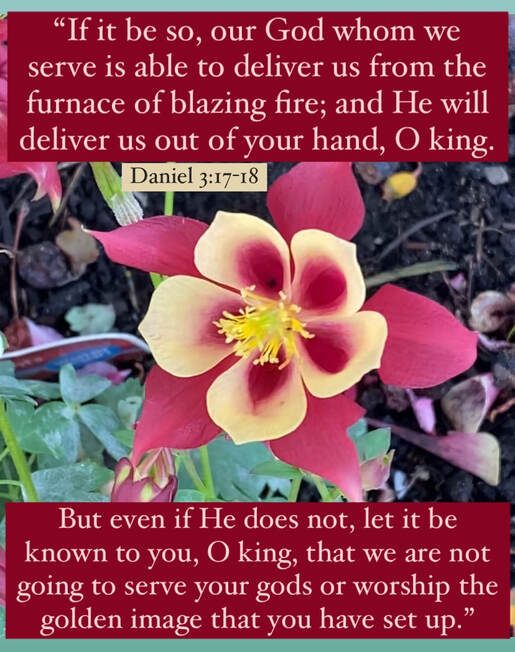 I've been thinking about parents who encourage their toddlers & young children to "help" with the daily chores of sweeping, cooking, laundry, yard work & such. Doing so is not because the little ones are actually helpful in these ways, rather it is preparation & for their healthy development that parents take extra time & effort doing this. And so it is with God, who allows & equips us to "help" Him do His will: Romans 12:2 Do not conform to the pattern of this world, but be transformed by the renewing of your mind. Then you will be able to test and approve what God's will is--his good, pleasing and perfect will. As children are in comparison to adults, we are even greater still so much more vastly 'clumsy' & insufficient compared to God! Even with the best of intentions, we get in the way of His perfect will. Probably messing things up far more than actually helping! Might it be that this perspective can take some needed pressure off the "being good" part of what it means to be the Lord's disciples? He takes us on! Continuing to equip & develop us despite our many failures. Even when we 'do things right' as in the case with Daniel, this may mean exposure to blazing fires & lions' dens for us to get the Lord's message & show it to others. Despite potentially negative consequences, Daniel 'tested & approved what God's will is' by sharing his interpretation of the "writing on the wall" to king Belshazzar: Daniel 5:23 "...you have praised the gods of silver and gold, of bronze, iron, wood and stone, which do not see, hear or understand. But the God in whose hand are your life-breath and your ways, you have not glorified." Imagine being trapped with hungry lions for worshiping God, as Daniel did, despite king Darius's injunction not to. Daniel didn't have to kill these lions. God demonstrated His power in a more delicate way by sending His angel to shut the lions' mouths in light of Daniel's innocence. Daniel's courage & survival inspired the king to make the following declaration: Daniel 6:26-27 I make a decree that in all the dominion of my kingdom men are to fear and tremble before the God of Daniel; For He is the living God and enduring forever, And his kingdom is one which will not be destroyed, And His dominion will be forever. He delivers and rescues and performs signs and wonders In heaven and on earth, Who has also delivered Daniel from the power of the lions. God made us to dwell in perfect presence with Him in the Garden of Eden. Of course He prefers when we listen to Him & do not sin but He knows we are all learning to 'test & approve what God's will is' & in doing so we make many mistakes. Some of us wrestle with the thought: "If only I were in the perfection of Eden like Adam & Eve lived, it would be easier to not to sin." Yet, here on earth, in our fallen state, God provides us with an 'out' that reconnects us with the perfection of the "Garden of Eden" --this is Jesus & the Holy word of God, the Bible. Yet still there are so many who choose not to acknowledge & receive these gifts as such; as His word & the way, the truth & the life. I pray that we receive these gifts over & over as many times as is needed to live 'his good, pleasing & perfect will.' Amen.
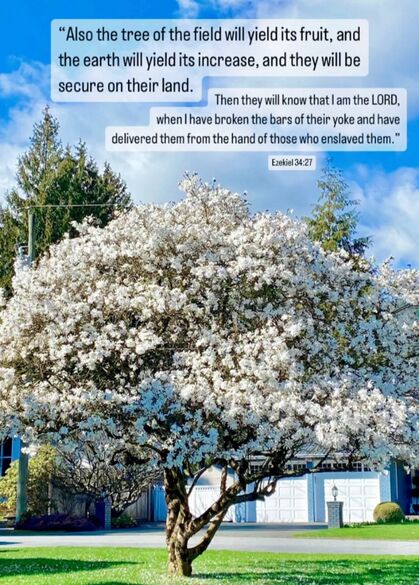 “You can’t have God’s mercy & grace without His wrath & His justice.” —Pastor Doug Wiebe. At our Easter service at Aldergrove Alliance Church, Pastor Doug went on to explain that without Jesus Christ's finished work on the cross, God's justice (wrath) would "ruin us" because in our fallen state of sin, we can not survive the presence of God without the atoning sacrifice of our Lord & savior, Jesus Christ. What better book of the Bible to demonstrate pastor Doug's point than Ezekiel? I pray that we all learn from this important history & humbly accept the gift of God's mercy & grace, His son, our redeemer & advocate, amen. In chapter 9, verse 9 of Ezekiel, it is written: "The iniquity of the house of Israel & Judah is very, very great..." & yet God shows His mercy, sparing those "who sigh & groan over all the abominations which are being committed in its midst." (Ezekiel 9:4-6). However, towards those committing atrocities, He says: “Now the end is upon you, and I shall send My anger against you; I shall judge you according to your ways, and I shall bring all your abominations upon you. In Chapter 11, God expresses His promise to help us choose Him & remain steadfast in His ways: “And I shall give them one heart, and shall put a new spirit within them. And I shall take the heart of stone out of their flesh and give them a heart of flesh, God instructed & equipped Ezekiel to repeatedly warn the people of Israel in numerous ways, throughout a period of about twenty years, of the coming consequences of their sins! "Say to them, 'Thus says the Lord God, ... Say, 'I am a sign to you...." (Ezekiel 12:10-11). Furthermore, He promises to protect a 'remnant' who go on to share with other nations about the saving grace & miraculous sustaining power of God: “But I shall spare a few of them from the sword, the famine, and the pestilence that they may tell all their abominations among the nations where they go, and may know that I am the LORD.” Ezekiel 12:16 However, towards those committing brutal atrocities against God, who do not listen to warnings to change, there is no escape: “As silver is melted in the furnace, so you will be melted in the midst of it; and you will know that I, the LORD, have poured out My wrath on you.” Ezekiel 22:22 “And your lewdness will be requited upon you, and you will bear the penalty of worshiping your idols; thus you will know that I am the Lord God.” Ezekiel 23:49 “Will you still say, ‘I am a god,’ in the presence of your slayer, although you are a man and not God, in the hands of those who wound you?” Ezekiel 28:9 God pleads with His created fallen ones that they turn from their destructive actions & idolatries but He knows they have fallen too far away from Him to do so: “Say to them, ‘As I live!’ declares the Lord God, ‘I take no pleasure in the death of the wicked, but rather that the wicked turn from his way and live. Turn back, turn back from your evil ways! Why then will you die, O house of Israel?’ Ezekiel 33:11 May their deaths at least continue to serve as more than a warning for others to heed & respond to: “But as for you, son of man, your fellow citizens who talk about you by the walls and in the doorways of the houses, speak to one another, each to his brother, saying, ‘Come now, and hear what the message is which comes forth from the Lord.’ Ezekiel 33:30 In today's modern world, so many of us are raised without any notion of the necessity for reliance on God. Science, culture & other forces have taught us that Bible scripture & even God is nothing more than a fairy tale of superstitions from the past when people were ignorant of what is really going on. To many, the Bible describes a time when, to make sense of things, people had to make up outrageous stories. But actually, the same atrocities that took place back then, are still occurring today. The violent wars, bloodshed, corruption, oppression & other forms of "hard-heartedness" toward God & His guidance persist despite His patient protection & pleas for us to get our 'stuff' together & choose Him over all else. Science nor culture; nothing of this world can save us from evil, our own or otherwise. But the good Lord God can, will & does everyday, amen. “I will feed My flock and I will lead them to rest” declares the Lord God. According to Biblehub.com 'the fat & strong' mean "prosperity which begets hardness of heart and forgetfulness of God". https://biblehub.com/commentaries/ezekiel/34-16.htm God teaches us with dire warnings from the past & ultimately graciously gave us His son, Jesus Christ; 'showers of blessing' (Ezekiel 34:26) in which the choice to partake is ours: “Then I will sprinkle clean water on you, and you will be clean; I will cleanse you from all your filthiness and from all your idols.” Ezekiel 36:25 “And I will make a covenant of peace with them; it will be an everlasting covenant with them. And I will place them and multiply them, and will set My sanctuary in their midst forever.” Ezekiel 37:26 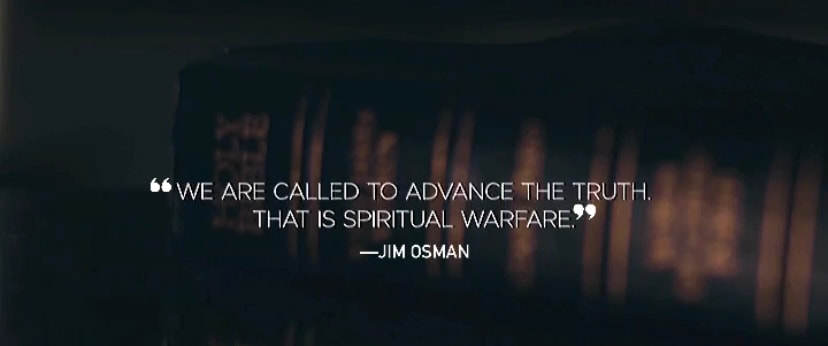 There are many ongoing theological debates amongst Christians, one of which I've been looking into lately is: can Christians be possessed by the devil, demons & evil spirits? Jim Osman, in his series, Spiritual Warfare: Truth or Territory (American Gospel); Justin Peters Ministries (Christ Alone: American Gospel), Matt Mcmillan Ministries & Doreen Virtue all say an emphatic "No!" & advise against deliverance ministries. Quoting scripture such as: ...having believed, you were sealed with the Holy Spirit of promise...(Eph. 1:13) We know that whoever is born of God does not sin; but he who has been born of God keeps himself, and the wicked one does not touch him. (1 John 5:18) "...does not sin..." is the key phrase in the second verse (I'll briefly touch on the first verse later). Jesus is the only one born of God who does not sin! Therefore, Jesus is the only one not touched by the evil one. Living in this fallen, sinful world of duality, we can't avoid being influenced & impacted by the knowledge of both good & evil.  While I definitely also have major concerns about large, showy deliverance ministries, I also can't help but wonder & even doubt that those advising against 'deliverance ministries' in general, have contended with extremely painful/limiting & persistent circumstances or experiences not sorted out by other means, either secular (e.g. psychological & medical help) or 'ordinary' Christian practices (e.g. repentance, Bible study, prayer & obedience). The 'out there' intensity of massive healing gatherings at mega churches (e.g. Benny Hinn; Kenneth Copeland & Joel Osteen) demonstrate how greedy, power-hungry so called Christian leaders, take advantage of people who are desperate for health & freedom. We must understand that while it's true that Christians are FREE IN SPIRIT with eternal life in Christ ("...sealed with the Holy Spirit...) we are not yet fully free in body & soul. The Holy Spirit indwelling, works His way into all our dark parts (those damaged by evil & sin) to heal & resurrect us whole, amen! I want to add a contrasting point to what I've said above that I haven't heard from those advising against deliverance ministries: the value of the concept of deliverance. It can be very empowering for people who are ill, injured, disabled or struggling with addiction, to have an external force to fight against to help them overcome their situation rather than let whatever hardship they are going through, kill them. To frame cancer as ‘an attack of the devil’ can help people rally & fight for their life instead of easily becoming too passive to survive in the face of extremely challenging symptoms & medications that makes them feel even worse. These well-known deliverance leaders I've mentioned above are simply 'moving peoples' energy'. By that, I mean they are re-arranging a person's broken pieces, which looks fancy & dramatic. It's possible that a few people get lasting healing from the belief that it will help but what about those who pay large sums of money to bring their dying child but get nothing in return? Backing up a bit, on the other hand, a constant, long term battle against ‘the enemy’ can can be exhausting & demoralizing. How does one reconcile dying in peace if they succumb to being 'defeated by the devil' as Beni Johnson died of cancer last year, for example? Furthermore, we are taught by Jesus to: “…love your enemies…” (Matthew 5:44). Yet it is true that Amos said: “Hate evil & love good…” (5:15). I conclude like Paul (Philippians 4:8) that we must look for, submit to, find, create & focus on God & all that is good, especially in our most challenging situations & by doing this, we resist (squash/minimize the effects of) evil (James 4:7). The evil one, also called ‘the thief’ (John 10:10) & ‘father of lies’ (John 8:44) is not omnipresent (as God is) but he doesn’t have to be to do his work of stealing, killing & destroying. He doesn’t have to possess or even ‘infest’ people to oppress & destroy them. He works by stealing the TRUTH & convincing people of that which brings suffering & quickens death. Using physiological & psychological (somatic) means, he creates "strongholds" which confirm peoples’ worst nightmares. He uses common human experiences of accidents/injuries, illness, bullying/abuse, poverty, isolation, physical & emotional pain (e.g. fear, shame, guilt, loneliness, frustration, & anger) to get us to destroy ourselves by believing lies such as the following (these 'thoughts' come from somatic imprints): 1. This illness will continue because it’s impossible to completely stop sinning (& be untouchable by the wicked one). Biblical Truth that opposes this lie: And His disciples asked Him, "Rabbi, who sinned, this man or his parents, that he would be born blind?" Jesus answered, "It was neither that this man sinned, nor his parents; but it was so that the works of God might be displayed in him." (John 9:2-3) 2. I’ll never be ‘good enough’ to be well or well enough to do enough good. Biblical truth that combats this lie: Thankfully God has given us clear instructions on how to 'overcome ourselves' by inviting Him in rather than by trying to be 'good enough'. The sense of not being good enough runs deep, probably into our DNA, causing all kinds of problems such as working to exhaustion, addiction & other forms of idolatry. For by grace you have been saved through faith, and that not of yourselves; it is the gift of God, (Eph. 2:8) Now may the God of peace ... equip you in every good thing to do His will, working in us that which is pleasing in His sight, through Jesus Christ, to whom be the glory forever and ever. Amen. (Hebrews 20-21) 3. Life isn’t worth living with such ongoing pain. I'm useless much of the time yet taking up God's valuable resources. Biblical Truth against this lie: But as for you, you meant evil against me; but God meant it for good, in order to bring about as it is this day, to save many people alive. (Genesis 50:20) while we do not look at the things which are seen, but at the things which are not seen. For the things which are seen are temporary, but the things which are not seen are eternal. 2 Cor. 4:18 The evil one ‘reminds’ those like me who’ve been sick for a long time that we're 'good for nothing wastes of space' --more lies! Over the course of life, through our experiences, evil & sin plant ‘seeds of lies’ within our bodies & psyches & then can pretty much leave us to it except for checking in from time to time to make sure we stay on their 'program'. Unintentionally, we unfortunately often make some lies come 'true' to some degree. But while men slept, his enemy came and sowed tares among the wheat, and went his way. (Matthew 13:25) These lies can fester & infect us, especially when we’re caught up in difficult circumstances. And, if we don’t have enough TRUTH already planted, rooted & well established within good soil, these ‘seeds of lies’ grow into massive, invasive weeds (e.g. parts of our personality & more difficult life circumstances such as poverty & addiction), that choke out truth, take over & eventually can take us down & out of life. The ultimate goal of satan's lies is our total destruction. We should aim to hear & know God's Biblical word of TRUTH at least one hundred fold more often as a positive 'counterweight' to the lies of the wicked one. To live from a place of: "Your kingdom come, Your will be done, on earth as it is in heaven” we must not let our experiences dominate or dictate reality or tell us what is true. Instead, we must renew our mind by letting the TRUTH of scripture inform our experience. For instance, these two Bible verses surely tell us we can & ought to "move mountains" from getting in our way of living a gloriously Godly life. For verily I say unto you, That whosoever shall say unto this mountain, Be thou removed, and be thou cast into the sea; and shall not doubt in his heart, but shall believe that those things which he saith shall come to pass; he shall have whatsoever he saith. Therefore I say unto you, What things soever ye desire, when ye pray, believe that ye receive them, and ye shall have them. (Mark 1-:23-24) Then the disciples came to Jesus privately and said, “Why could we not cast it (the demon) out?” And Jesus said unto them, Because of your unbelief: for verily I say unto you, If ye have faith as a grain of mustard seed, ye shall say unto this mountain, Remove hence to yonder place; and it shall remove; and nothing shall be impossible unto you. (Matthew 17:20) Many of satan's ‘seeds of lies’ get planted early in life & most of the time seem harmless or dormant while our lives are going well. They germinate & grow quickly when things don’t go as we hope & especially if we become disabled by pain & other symptoms. Regardless of whether these lies are inactive or wreaking havoc, whenever we get ourselves into harmonious union with God, we are blessed to be having a 'Garden of Eden' moment. As soon as we listen to the temptations (e.g. lies, 'God-doubts') of the evil one & choose to eat whichever 'forbidden fruit' he's selling us, we (once again) fall from the place of deep presence with the Lord. Fortunately, we do not fall out of God's hands or out of His mercy & grace! For we know the TRUTH: ...that all things work together for good to them that love God, to them who are the called according to his purpose. (Romans 8:28) And we hold fast to: casting down arguments and every high thing that exalts itself against the knowledge of God, bringing every thought into captivity to the obedience of Christ (2 Cor. 10:5)
God loves everyone unconditionally, meaning no matter what we do, He loves us, wanting the best for us. He knows what the best for each of us is, since we are His creation & children. He is patient, wanting everyone to come to Him for repentance. More about Jesus’ forgiveness here: because-he-first-loved-us.html
Many times in the Bible, we are told "Do not fear" also 1 John 4:18 says "Perfect love casts out fear". Yet, it is also written: "The fear of the Lord is the beginning of wisdom..." (Proverbs 9:10) which seems a contradiction but it's not. When we have rightful fear of the Lord, we need not live in fear of the evil in the world. The Lord goes about His way of inspiring each of us toward His forgiveness & will. Allowing the "heat" of this world to intensify our life experience until (ideally) we drop to our knees in surrendered reverence to Him. This type of genuflect happens often from fear (illness, pain, conviction of sin) & awe as God's love provides profound moments of relief. The fear of the Lord is the beginning of wisdom; it's not our only/final destination! It makes sense to fear the One who is "all love" & therefore, all powerful. He protects us from that which is "all evil". While evil is a much limited force compared to love, it's damaging. Whereas agape, like parental love, doesn't always feel good, but it is good for us: "I am the Lord, & there is no other .... Causing well-being & creating calamity..." (Isa. 45:5 & 7). Most everyone longs for love, yet we also fear it to some degree because it means obliteration of little 's' self (our version of death on the cross). There is no hiding anything from the crucible of God's love. His love reveals, in ways that lead us to repent, our self-defeating/inflating & vengeful behaviors as well as our prideful, selfish, jealous & otherwise sinful natures. It's not easy; it's the warriors' way of the cross, fitting through the narrow gate unto resurrection. A YouTube short I made on this topic: https://youtube.com/shorts/bFYSrCpl9bQ?si=QLq4A1JG8-zfOH6i A clip from a Youtube video about masculinity & the Way of the Cross: https://youtube.com/clip/UgkxcRsAjUt9KRQlJy5wRk0KwvauABJRncyM?si=gv9Og410XrNPQNbg 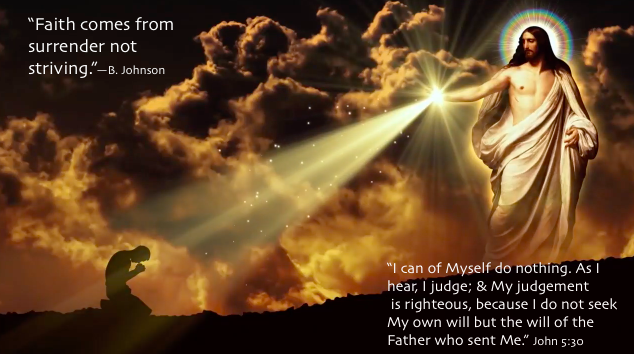 I’m encouraged by the increasing numbers of individuals, myself included, who realize we are being blinded to faith & are overcoming that. By faith I mean trusting the principles & promises of The Word; that the Bible is true, holy & sacred, from & of God, amen. “The god of this age has blinded the minds of unbelievers so that they cannot see the light of the gospel that displays the glory of Christ, who is the image of God.”  What I mean by ‘blinded to faith’ is analogous to growing up in darkness & silence. If that were the case, being exposed later in life to visual & auditory stimuli wouldn’t make sense, especially at first. In fact, one would likely deliberately close their eyes & plug their ears to reduce the confusing effects of the new types of information.  We would default to using our sense of touch, taste & smell to try to ‘see & hear’ but obviously that wouldn’t work. It is the same for faith. Especially at first, we can't rely our usual ways of sensing & thinking to come to faith. Faith has everything to do with the immaterial, spiritual realm (which includes but is not limited to the confines of the material world) to which many of us are not only unaccustomed to but are also hostile against. So how do people acquire faith? There are several factors at hand in this matter. First & foremost: “No one can come to me unless the Father who sent me draws them, and I will raise them up at the last day.” (John 6:44) & "And I, when I am lifted up from the earth, will draw all people to myself.” (John 12:32) Furthermore, our sense of faith develops in the light of the faith of others. I pray in the name of Jesus, this blog will ignite a fire of faith in each of the readers hearts so that they share their faith in fitting ways with others, amen. The Bible says: “So faith comes from hearing & hearing through the word of Christ.” (Romans 10:17) Notice here, as Bill Johnson of Bethel Church points out, that it doesn’t say: “So faith comes from hearing the word of Christ.” No, first, we hear through The Word of Christ & then faith comes. “The point is, according to The Message, before you trust, you have to listen.” If we close off to hearing what Christ says, faith can't flourish within the soil of our hearts. Two other important factors regarding the acquisition of faith: the renewed mind & heart of flesh. “And I will give you a new heart, and a new spirit I will put within you. And I will remove the heart of stone from your flesh and give you a heart of flesh.” (Ezekiel 36:26) I like the way Bill Johnson sums up this point by saying: "Faith doesn’t come from the mind, we know that. Faith comes from the heart but the renewed mind is like the banks of a river; it creates the context for faith to flow in .... And the renewed mind anchors into what God has said above every other voice.” AMEN!  I've been thinking about the significance of monotheism - One True God. I've been watching the series, The Triumph of Christianity with historian scholar, Bart Erhman, of the University of North Carolina. He explains that the commandment 'Thou shall have no other Gods before me' is a major factor in what caused a handful of Christians in the ancient, mostly pagan, Roman empire to become 25-35 million Christians by 400 CE.
Just as one pitfall of modernity is too much choice, the practice of worshiping many gods potentially allows for detours away from difficult but necessary changes & growth, for example, that certain circumstances or limitations are meant to cultivate. When push comes to shove, most people will take an out if given the chance. Would we not continually go from one wonder-doing god to the next until we get the help & answers we seek? Would these gods then not just be feeding our already overstuffed egos? Lower case gods appease people for status & money but the Lord God does not. Many people I'm sure wish it were not so that God doesn't work for $ lol, amen! Simply put, we often don't like His ways & plans & that's just tough beans because there is none higher to appeal to. Much of the toughest stuff we are faced with is of our own doing anyway, not God's. The consequences of sin are often brutal. Even within the mercy & grace of Jesus Christ, the painful effects of sin are real & take time to heal. It's tempting to imagine that something else needs sorting out first, to get distracted with other 'pursuits' (gods) & before you know it, sin some more, rather than just keeping on resting still in God's hands while he mends our wounds. Our salvation happens in an instant, the moment we first believe, but healing from sin can take a lifetime & sometimes takes God level patience, like when a day feels like a thousand years. God bless, y'all, amen! 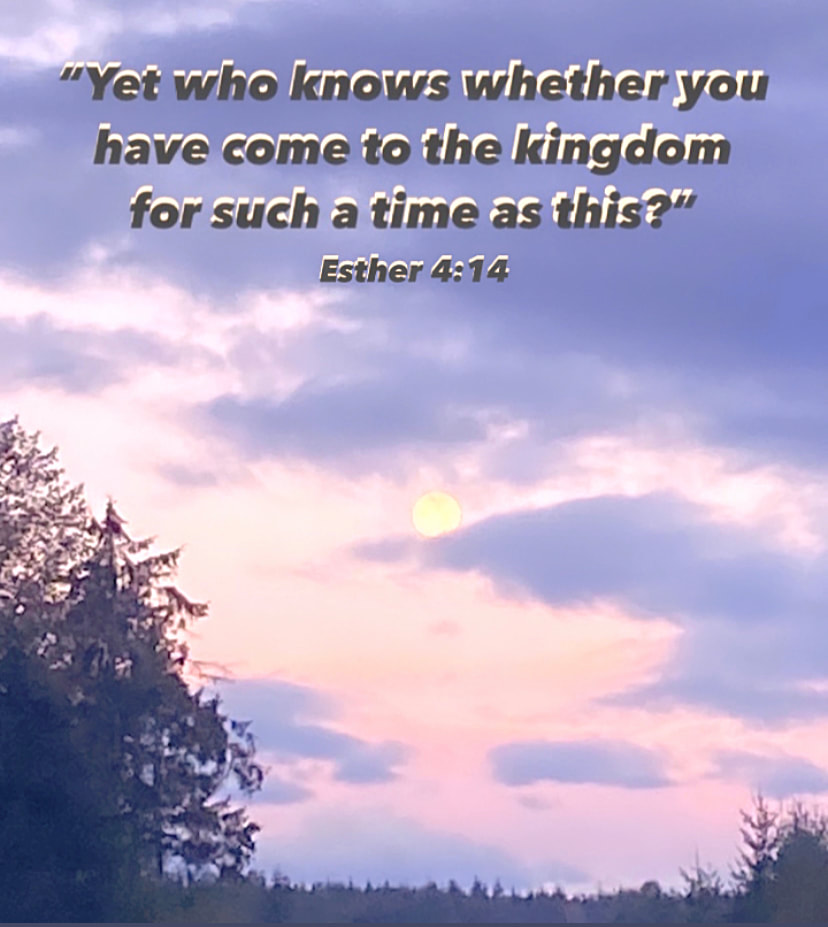 I took this moonset photo early morning October 10th, 2022 while I was visiting my Dad in Campbell River so it brings recent cherished memories.
Esther 4:14 is a message from Esther's guardian Mordecai, explaining her difficult situation: "For if you remain completely silent at this time, relief and deliverance will arise for the Jews from another place, but you and your father’s house will perish. Yet who knows whether you have come to the kingdom for such a time as this?” However, Esther's identity as a Jew was a secret at that time so she may have been able to escape the planned massacre of the Jews. Despite this she decided to offer support to "her people" no matter the cost ("And if I perish, I perish" Esther 4:16) Risking her life twice, Queen Esther acted against the king's rules by going to him uninvited and she revealed her Jewish identity to him. Yet by doing these things, she was not put to death but instead, she was able to stop Haman's ploy to kill the Jews. Amen! "Yet who knows whether you have come to the kingdom for such a time as this?" Who knows? God knows & it is not only Queen Esther but it is all who come to the kingdom, the Kingdom of God, that come for such a time as this! Knowing when it's a time to: *rest & remain silent or a time to act & speak up; *honor & conceal or a time to obey & reveal; *pray, fast & offer risky support ... takes courageous dedication & faith in God's grace, guidance & purpose. Praise the Lord, Amen! Blessed are the pure in heart for they shall see God. (Matthew 5:8) 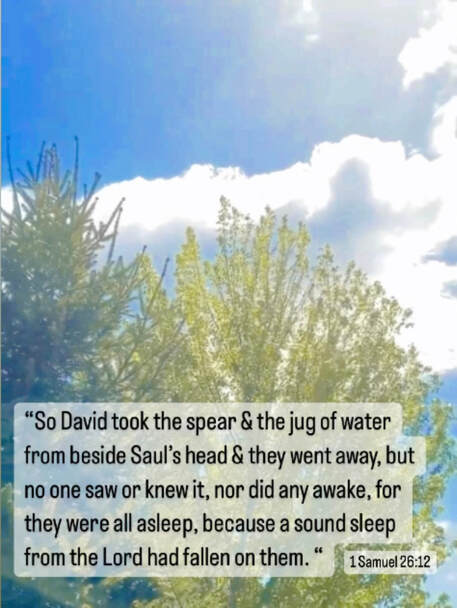 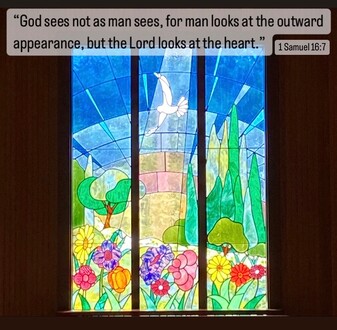 God offers everyone the ultimate free gift: eternal relationship with Christ! Why some people forever resist this supernatural love & protection is puzzling to me. Yet from my own experience, I see that acceptance of God's gift - belief in Jesus & faith in the Gospel, evolves. It seems that people go through a stage of fading belief & interest due to reasons that are probably similar to why some people never believe. For examples, life's atrocities & challenges ("How could a loving God..."); unanswered prayers & questions; other things & relationships (idols) made priority; adoption of the mainstream-reductionist, analytical worldview.
People in disbelief or the 'estranged' stage of faith are either unable to experience the real life magic of Christ or integrate these experiences with their reality and rather than facing the dissonance, they focus on other aspects of life. All the while, God orchestrates that which has us turn towards Him & say "Yes please, thank you God." When we choose to be close enough to hear God, he uses what only he can see in peoples' hearts to guide us. God makes a way, but in this fallen (from God's grace) world, it's often not an easy or pain free way towards His goal of one heart & mind. For instance like when the Lord ensured that Saul & 3000 of Saul's soldiers who were hunting David stay soundly asleep while David showed up Saul! Forevermore, I'll be relaxing & trusting God not only when life is "good" but especially through difficult times. I'm reading God's word, learning, listening, praying & enjoying God's gift of the living presence of Jesus that keeps on giving :) Amen! 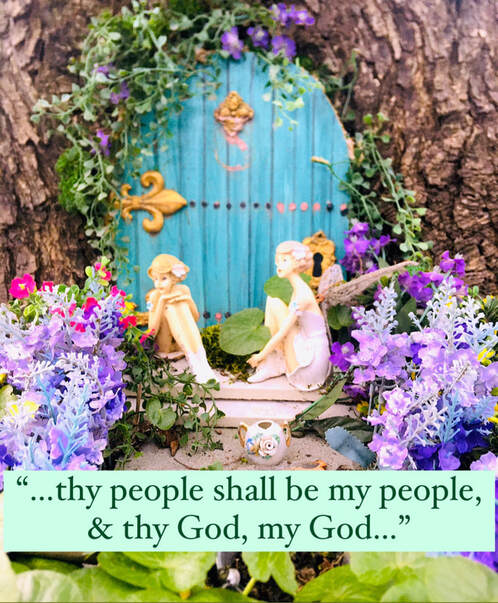 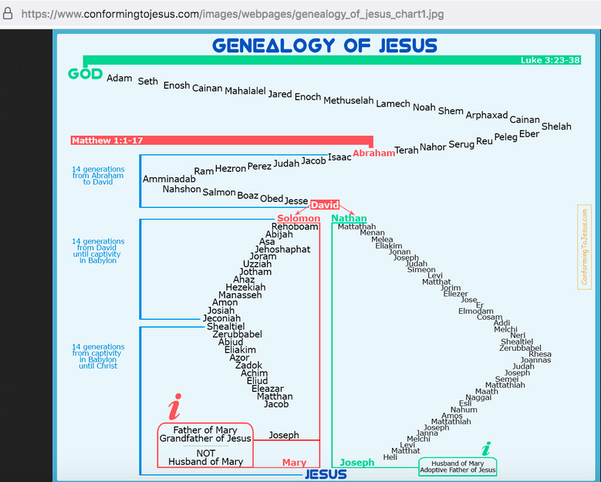 "And Ruth said, Intreat me not to leave thee, or to return from following after thee: for whither thou goest, I will go; and where thou lodgest, I will lodge: thy people shall be my people, and thy God my God..." (Ruth 1:16)
As bleak as things were after the deaths of her father & brother in laws and of her own husband, why did Ruth insist on staying with Naomi? What made Ruth so sure that being with Naomi was the right thing for her to do? It seems that it would have been more reasonable for her stay in Moab, as her sister did, to find another husband. As with much in the Bible, we can speculate and pray for understanding, but we can't know Ruth's thought process (without being able to ask her). Was Ruth's decision impulsive or well reasoned & planned or somewhere in between, guided by God? Ruth certainly didn't hem and haw over this major choice point in her life, which leaves me wondering, when a tough choice is easy to make, is it preordained? Ruth's strong commitment to her family by marriage led to an 'out of the ordinary' type of union between her and Boaz which eventually (31 generations later) led to the magnificent birth of Jesus. I know ... wow, right? AMEN! |